Diapers
1. Prefolds or flats with a cover (cover not shown in the picture). These are square, flat pieces of cloth that you have to fold, fasten on, and then attach a waterproof, wool, or fleece cover over the top.
Pros: Generally considered the most economical; covers can be wiped down and reused for a few diaper changes if there is no poop
Cons: Steeper learning curve to getting the right fit; multiple steps to put the diaper on
 |
| A prefold fastened on with a Snappi |
2. Fitted diaper. This is a diaper that snaps on, no folding required, but is not waterproof, so needs a cover on top.
Pros: Very absorbent, good for heavy wetters or nighttime use
Cons: Multiple steps to put the diaper on; can be quite bulky
 |
| A fitted diaper |
Pros: Simple to use; stay-dry fabric wicks moisture away from skin; absorbency is easily customized
Cons: Inserts have to be stuffed into the pockets
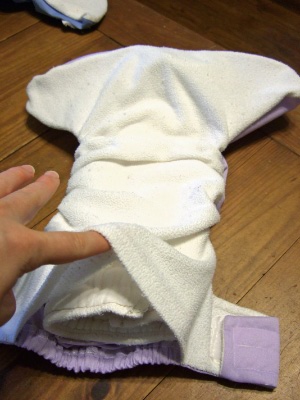 |
| A pocket diaper stuffed with a prefold |
4. All-In-One (AIO) diaper. This is exactly how it sounds: one whole diaper ready to go, no stuffing or folding required. The absorbent part is sewn in.
Pros: The easiest diaper to use, goes on like a disposable
Cons: It is difficult to adjust absorbency; takes longer to dry
 |
| An All-In-One |
5. Hybrid diaper/All-In-Two (AI2). This is kind of a cross between a cover and an AIO. These usually have an insert that snaps or lays into the cover.
Pros: Ease of use; can wipe and reuse the cover if there is no poop
Cons: The waterproof fabric of the cover (PUL) is usually exposed, meaning there is no soft fabric sewn on.
 |
| Hybrid diaper with snap-in insert |
Inserts

1. Microfiber. Diapers usually come standard with microfiber inserts.
Pros: Absorbs quickly and holds a lot of liquid
Cons: Prone to compression leaks (such as when baby is in a car seat or jumper, or just sitting); tends to hold stink; can give the baby a rash if put directly against the skin
2. Hemp and bamboo
Pros: Both hold a lot of liquid; are natural fibers so can be put directly against the baby's skin; not prone to compression leaks
Cons: Typically absorb slower than microfiber, meaning if your baby pees a lot all at once, it might not be fast enough to keep up, resulting in leaks
3. Cotton. Prefolds and flats are usually made of cotton.
Pros: Holds a lot of liquid and absorbs quickly; is a natural fiber so it can be put against the baby's skin
Cons: Does not wick away moisture, so the baby will feel wet if it is against his skin. Some babies are sensitive to the wet feeling and some aren't.
4. Bamboo/microfiber blend. This is usually a layer of bamboo on the outside, and several layers of microfiber on the inside. These have all the pros of bamboo and microfiber, and none (or few) of the cons.
There are SO many options out there, and every baby is different. As they grow and develop, certain brands or inserts may work better than others at different times. That's why I recommend having several different brands or styles in your stash, so you can switch out as needed.

No comments:
Post a Comment
I would love to hear from you! Please remember that this is my personal blog reflecting my opinions. You may disagree with me but please do so kindly. I will not approve comments that are rude or derogatory.